
Childhood is often called the foundation of life. Just as a strong building needs a strong base, a child needs early lessons in values and social behavior to grow into a balanced adult. While academics and extracurriculars are important, some of the most crucial life lessons come from simple daily interactions in play school. These early experiences of sharing, caring, and teamwork form the backbone of a child's emotional and social intelligence.
In India, where family, community, and relationships are deeply valued, these skills play an even bigger role. As we say, "Bachpan mein sikhi aadatein, zindagi bhar saath rehti hain." (The habits we learn in childhood stay with us for life.)
So, what exactly are the social skills children learn in play school, and why are they so important? Let's take a closer look.
For most children, play school is their first step into society beyond the comfort of home. Until then, a child's world revolves around parents, grandparents, and maybe siblings. But in play school, they encounter peers their own age, new authority figures in the form of teachers, and routines that involve cooperation.
This environment introduces children to the concept of community:
From circle-time storytelling to free-play sessions, children constantly learn by observing and doing. Every activity, even something as simple as waiting for their turn on the slide, becomes a social lesson.
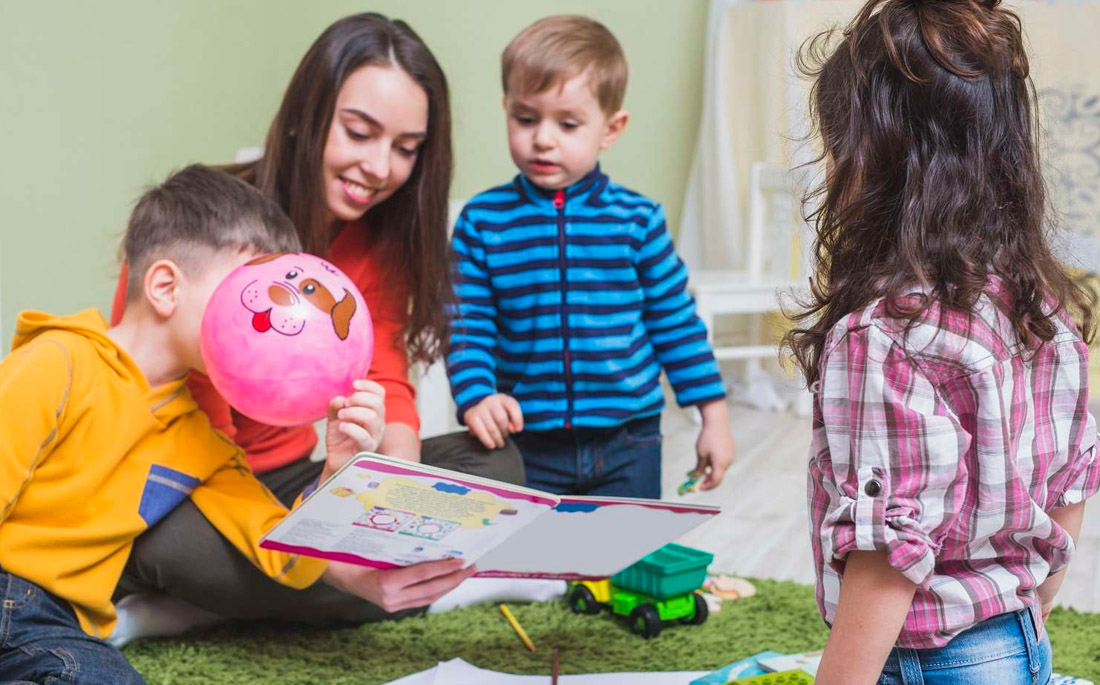
One of the earliest lessons of play school is sharing. At home, a child may have their own set of toys, crayons, or books. But in a play school, resources are communal-everyone plays with the same blocks or puzzles.
This teaches several things:
Indian classrooms often encourage this behavior with structured activities like "passing the ball" games or sharing snacks during tiffin time. In fact, many parents recall with pride how their child came back home saying, "Aaj maine apne biscuits Arjun ke saath baate." (Today I shared my biscuits with Arjun.)
Learning to share is not just about toys-it's about cultivating generosity of heart. This lays the foundation for empathy and cooperation later in life.
Another social skill deeply emphasized in play school is caring for others. Children quickly notice that their classmates sometimes feel sad, scared, or hurt. Teachers guide them to respond-whether it's offering a hug, saying comforting words, or helping a friend pick up fallen blocks.
Why is this important? Because it builds emotional intelligence (EQ). Research shows that people with high EQ are often more successful, happier, and better leaders.
Examples of how caring is taught in play schools:
In India, where values like "seva" (service) and respect for others are cultural cornerstones, learning to care early on helps children align naturally with family and societal values.
If sharing is the first step and caring is the second, then teamwork is the final layer of early social development. Play schools often structure activities in groups-singing songs together, solving puzzles as a team, or putting up a small stage performance.
Through teamwork, children learn:
For example, when a group of kids build a block tower, one child may suggest the base, another adds the middle, and another crowns it with a flag. The pride they feel in saying, "Yeh humne saath mein banaya hai" (We made this together), is priceless.
In a country like India, where community festivals, group prayers, and collective celebrations are a big part of life, teamwork skills prepare children to participate meaningfully in society from a very young age.
Indian parents often focus heavily on academics-counting, writing alphabets, or reciting poems. While these are important, modern educators stress that life skills learned in play school are equally, if not more, valuable.
Why? Because these soft skills:
Parents can reinforce these values at home by:
When home and school both promote sharing, caring, and teamwork, the child's learning becomes holistic.
Think about the leaders, innovators, and changemakers we admire. What makes them great? It's not just their intelligence, but their ability to empathize, collaborate, and work for the greater good.
Play school is where these seeds are sown. The act of passing a toy today may one day translate into sharing ideas at work. Comforting a crying classmate may one day become supporting a colleague through tough times. Building block towers together may one day turn into building businesses, communities, and nations.
As one wise saying goes, "Pehla school bachpan ka hai, aur pehle guru dost hote hain." (The first school is childhood, and the first teachers are friends.)
Play school is not just about ABCs and 123s-it is the first classroom of life where children learn to be good human beings. The lessons of sharing, caring, and teamwork are simple, yet they shape character in ways no textbook can.
For Indian parents, recognizing the value of these skills is essential. By encouraging them at home and valuing them as much as academics, we ensure that our children don't just grow up to be smart individuals, but also compassionate, cooperative, and socially responsible citizens.
Because at the end of the day, success in life is not just about what you know, but also about how you connect, care, and collaborate with others.
1. Why are social skills important for children at play school age? Social skills help children develop confidence, empathy, and cooperation. These early habits prepare them for smooth interactions in school, friendships, and later life.
2. How do play schools in India teach children to share? Through group activities like circle games, common toy corners, and snack-sharing time, children learn that sharing brings joy and fairness to everyone.
3. What role do teachers play in developing caring behavior among kids? Teachers guide children to notice others' feelings and respond kindly-for example, by encouraging them to comfort a crying friend or help a classmate in small tasks.
4. How does teamwork benefit children in the long run? Teamwork teaches listening, patience, problem-solving, and collective achievement. These skills help children perform better in group projects, sports, and later in professional life.
5. Can parents support these skills at home? Yes! Parents can encourage sharing within siblings, praise small acts of kindness, and involve children in family teamwork, like setting the dinner table or cleaning up toys together.